need to find more sources on this one.
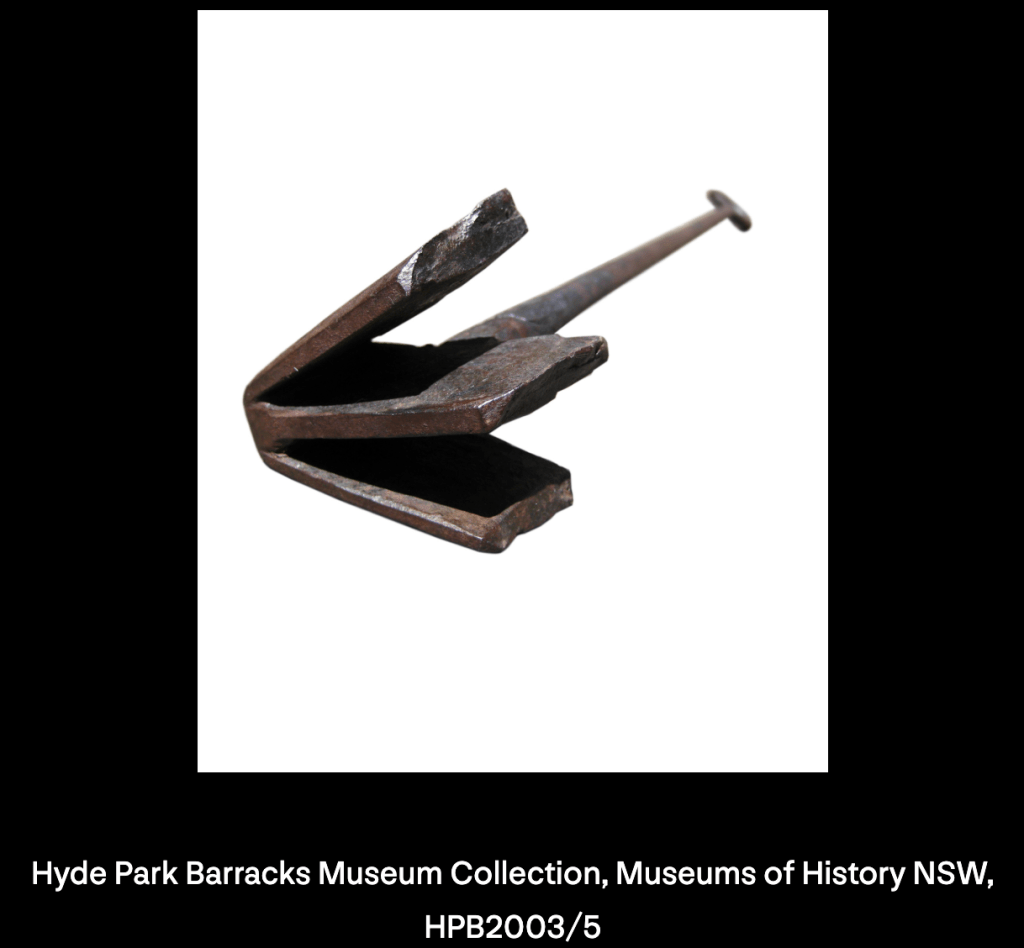
Early to mid-19th century
Branding irons like this one with the ‘broad arrow’ mark were used to brand government-owned property livestock such as cattle and sheep as well as items made from timber. Every item made or used by government convicts had to be marked or stamped with a broad arrow, the mark of government property, to prevent theft and the selling-on of government goods and tools. The broad arrow was so widely used to mark objects used by convicts that it became associated with the convict system itself, rather than just a symbol of government property. Some even said that the convicts themselves were marked with the arrow, since they were effectively government property too.
‘The Police have been so much on the alert for some time past, and have succeeded in stamping the broad arrow on so many notorious characters, that the streets are tolerably quiet just now. Sydney Gazette, 25 March 1830, p2′
SOURCE: Museums of History NSW https://mhnsw.au/stories/convict-sydney/branding-iron/
the question is, are the convict symbols you see on bluestones in melbourne actually legit convict symbols either denoting convict labour in stonemasonry OR simply to indicate masonry is government property. Or is it totally unrelated masonry sign.
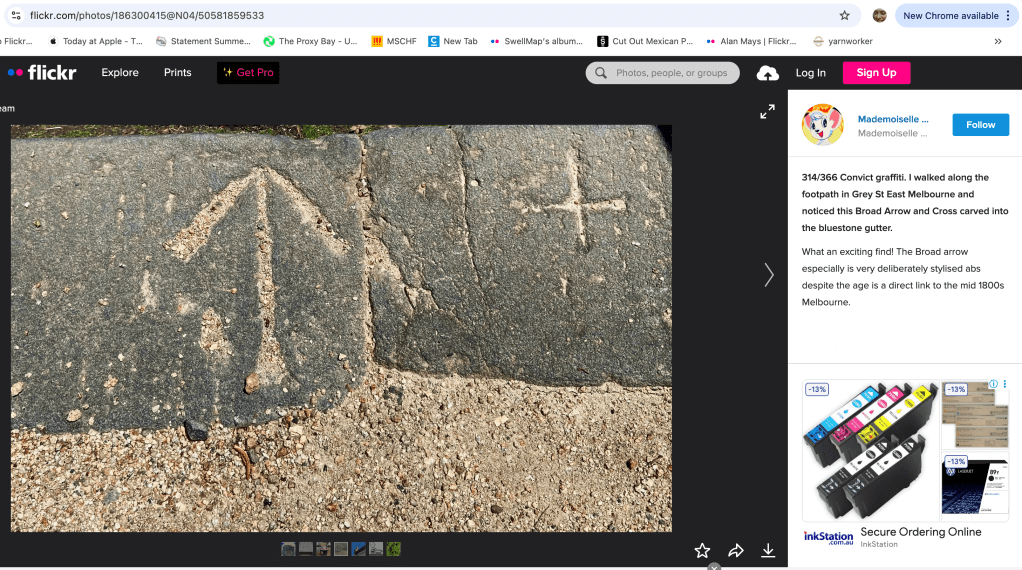
example A
https://www.flickr.com/photos/186300415@N04/50581859533
From: Grey St, East Melbourne. This does look interesting
example B convict chisel marks – I think these have been verified – melb cbd
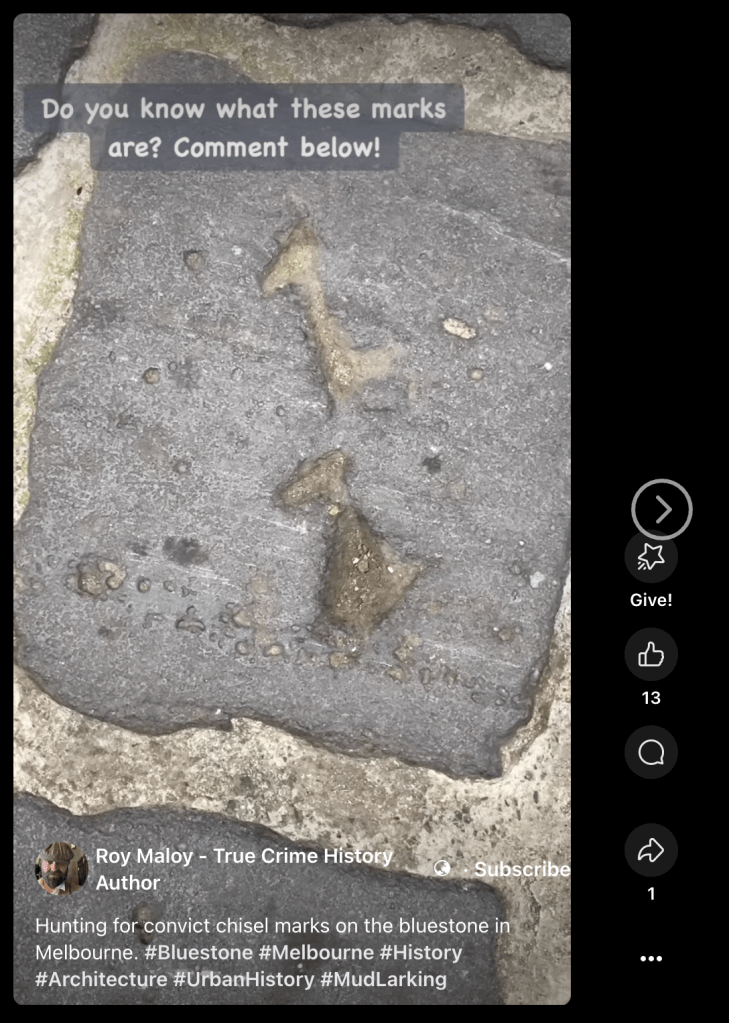
example C
Roy Maloy again
Moonee Ponds, Queens Park
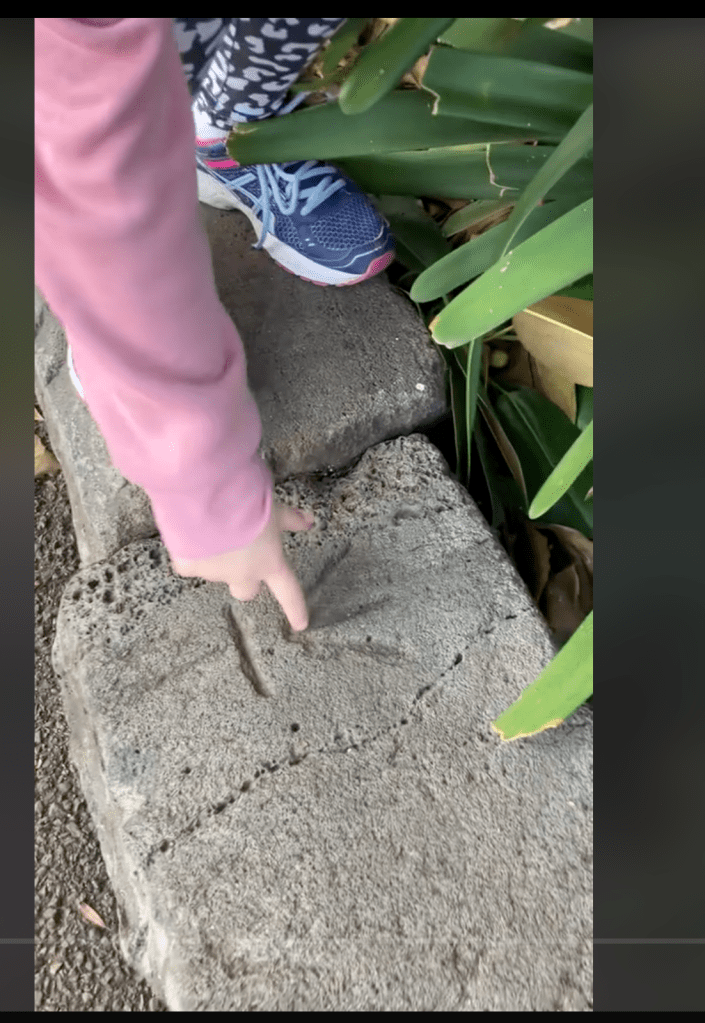
more examples:
MINE:
Corner Moor and Smith St, Collingwood
Cnr Little George and Gertrude, Fitzroy (south side, cbd side)
 burrows & co